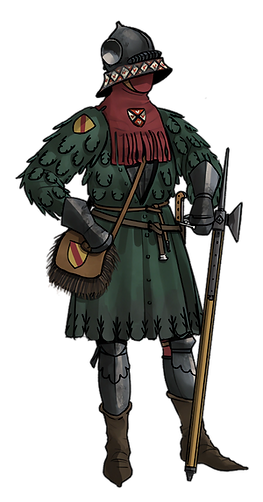
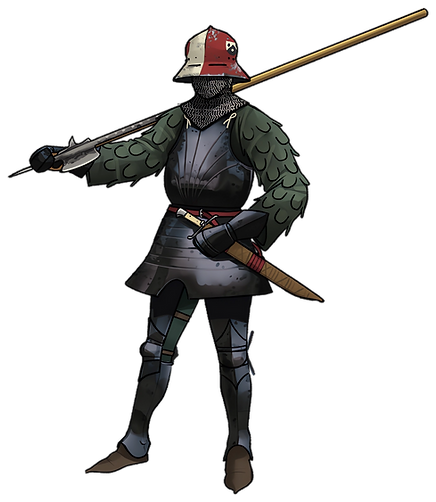
ÖSTERLAND
The Duchy of Österland is an eastern state of the Gottesreich, bordering Ludland and consisting largely of dense forests, dark lakes, rolling uplands, and low mountains. The people of the duchy are known as Österlanders, and speak Kernish.
Österland is ruled by Heinrich von Tollenitz, Prince-Elector of the Gottesreich, Duke of Österland, and Lord of Tollenitz. Heinrich governs from Ludenbrück, the ducal capital and principal administrative and commercial centre of the duchy. House von Tollenitz takes its name from the ancestral lordship of Tollenitz, which remains among the family's oldest possessions.
Österland is comparatively reserved in Imperial politics. Heinrich fulfils his obligations as Prince-Elector and Duke, but generally avoids involving himself in disputes which do not directly concern his lands. The duchy is therefore sometimes regarded as inward-looking, though it is neither isolated nor hostile toward its neighbours.
LAND AND ECONOMY
Much of Österland is heavily forested. Fir and pine dominate the countryside, broken by farmland, small settlements, lakes, mining communities, monasteries, and roads cut through the woods. Summers are green and mild, while autumns are wet and misty and winters long and snowy.
Forestry forms the basis of much of the rural economy. Timber, charcoal, resin, pitch, and tar are produced throughout the duchy, supporting sawmills, wagon-makers, coopers, carpenters, smiths, and other trades.
The hills around Tröglersrieth contain important silver deposits and support one of the wealthiest mining districts in eastern Gottesreich. Mines, smelting works, charcoal camps, and wagon roads dominate the surrounding country, giving Tröglersrieth a rougher and more industrial character than Ludenbrück.
HUNTING
Hunting occupies an unusually prominent place in Österlander noble culture.
This is particularly true of Duke Heinrich, whose enthusiasm for the hunt is well known throughout the Gottesreich. His household maintains extensive kennels, hunting horses, falconers, foresters, trackers, and gamekeepers, and the Duke spends considerable periods hunting throughout the forests of Österland.
Invitations to accompany Heinrich on a hunt can carry considerable political significance, allowing nobles and petitioners access to the Duke away from the formality of court.
MILITARY
Österland's military traditions are strongly shaped by its wooded and broken terrain.
Its Kriegsknechte, crossbowmen, scouts, foresters, road guards, and castle garrisons have a particular reputation for reconnaissance, patrol work, ambushes, and fighting in forests and narrow country. Österlander forces are accustomed to controlling roads, crossings, and passes where larger armies have difficulty manoeuvring.
Green is commonly associated with Österlander soldiers, particularly among foresters and troops operating in woodland, though the duchy possesses no standardized military uniform.
REGIONAL CHARACTER
Österlanders are commonly regarded as reserved, practical, and slow to interfere in the affairs of others. The same reputation applies to the duchy itself, which generally prefers to concern itself with its forests, mines, trade, and eastern frontier rather than the rivalries of distant Imperial princes.
Ludenbrück is the political and commercial heart of the duchy, while Tröglersrieth is its principal mining centre. Beyond them, much of Österland remains rural, with villages and estates separated by long stretches of woodland.
The forests play an unusually important role in Österlander life. They provide work, food, fuel, timber, hunting, and wealth, while also shaping local customs, superstitions, and military practice.
COMMON SUPERSTITIONS
Baying Hounds
If dogs begin baying at night, it is considered unlucky to open the door until they fall silent. Some believe the hounds are answering something moving through the darkness which should not be invited nearer.
Ash at the Threshold
Before a winter storm, some Österlander households scatter a thin line of hearth ash across the threshold before going to bed. If the ash is found disturbed by morning despite nobody having crossed it, the household expects bad weather, misfortune, or an unwanted visitor.
COMMON FESTIVAL
The Winter Hunt
held in the first deep cold of winter, when nobles, foresters, huntsmen, and invited guests gather for a great organized hunt followed by feasting in nearby towns or estates. The event has both practical and ceremonial purposes: reducing troublesome game, displaying horsemanship and hunting skill, reaffirming woodland rights, and strengthening ties between noble households.
In villages, the festival is marked more modestly with communal meals, smoked meats, hot ale, candles, and the blessing of hunting dogs and tools used in the forest. In ducal lands, Heinrich von Tollenitz is known to preside over particularly large hunts.
THE IMPERIAL DUCHY OF ÖSTERLAND
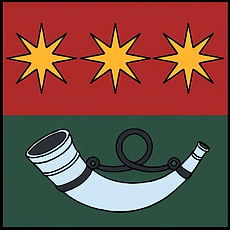
The Territorial Arms of Österland
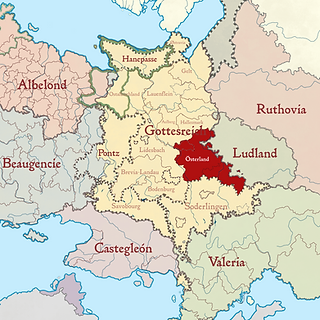
Political Map of Österland
Capital
and largest city
Ludenbrück
Official Language
-
High Kernish (Early New High German)
Common Languages
-
Common Vernacular (Modern English)
-
Low Kernish (Middle Low German)
-
North Valerian (Fictional Dialect)
Government
Hereditary Feudal Duchy
Reigning Lord
Heinrich von Tollenitz
Titles
Prince-Elector of the Gottesreich, Duke of Österland, and Lord of Tollenitz
Religion
Church of the Divine Diurnity
Denomination
Imperial Diurnism
Demonym
Österlander
Currency
Imperial Gilschen
Calendar
Imperial Calendar
Date: 1475
Notable Cities & Fortifications
Tröglersrieth